



-
 15+ Years
of Family Law Experience -
 2,000+ Cases
on Family Law Resolved -
 A+ Google
and BBB Rating -
 Extensive Local
Courts Expertise
Pasadena Family Law Representation in Harris County
Longworth Law Firm represents Pasadena clients in divorce, custody, child support, property division, protective orders, CPS matters, paternity, adoption, and other family law cases. Many matters proceed through Harris County family courts when Harris County is the proper venue. Daryl Longworth has practiced family law since 2011 and spent 28 years with the Houston Police Department, including service as a lieutenant. That background shapes a detail-focused approach to records, disputed facts, and evidence.

Family Law Services Texas Clients Rely On
Divorce Filings and Marital Dissolution
Texas allows both no-fault and fault-based divorce claims and generally requires a waiting period before a divorce can be finalized. Our Pasadena family law attorneys handle uncontested and contested divorces, including high-asset and military divorce matters, addressing issues involving property, retirement accounts, support, and parenting arrangements in the final decree.
Child Custody and Conservatorship
Texas courts use the child's best interest standard when deciding conservatorship and possession. We represent parents in custody agreements, contested custody cases, parental relocation disputes, visitation issues, and requests for decision-making authority, with proposed terms built around the facts of the family and the requirements of Texas law.
Child Support and Order Enforcement
Texas child support is generally based on the paying parent's net resources, the number of children covered by the order, and other case-specific factors. Our family law team can establish, modify, and enforce child support and can also address violations of possession and access orders when a parent is denied court-ordered time with a child.
Division of Marital Property and Assets
Texas is a community property state. Most property acquired during the marriage belongs to both spouses, and courts divide it in a manner the law calls "just and right," which does not always mean equal. Our attorneys trace separate property, value businesses and retirement accounts, and negotiate settlements that protect what a client brought into the marriage.
Modifications to Existing Court Orders
A move, job change, or shift in a child's needs may provide grounds to revisit an existing custody, visitation, or support order. We pursue modification requests and defend clients against changes they believe are unwarranted.
Family Violence Protective Orders
We represent people seeking protective orders after alleged family violence and respondents who need to contest allegations or proposed restrictions. When circumstances change, we also handle requests to modify, extend, or terminate an existing protective order.
CPS and DFPS Investigations
When the Department of Family and Protective Services opens a case, parents need representation early. We defend against allegations of abuse or neglect, respond to safety plans, service requirements, hearings, and other DFPS requests when they arise, and push toward reunification when children have been removed from the home.
Adoption, Paternity, and Parentage Matters
Longworth Law Firm handles stepparent, relative, and private adoptions as well as paternity and parentage matters involving DNA testing, custody, visitation, and child support. We also represent LGBTQIA+ families in matters involving divorce, parentage, custody, and adoption.
Prenuptial and Postnuptial Agreements
Our Pasadena family lawyers draft and review marital agreements that address property, debt, and inheritance concerns. Some are signed before the wedding, others years into the marriage.
#cta_start
Know What Your Next Legal Step Looks Like
Talk with Longworth Law Firm about the family law issue, the available options, and what may happen next in Harris County.
#cta_end
Deadlines That Shape a Family Law Case
Texas family law imposes deadlines at several stages of a case. The applicable deadline depends on the type of proceeding, when documents were filed or served, and whether an exception applies.
- 20 days to answer after being served. A respondent generally must file a written answer by 10 a.m. on the Monday following the 20th day after service, under Texas Rules of Civil Procedure, Rule 99. Missing it can lead to a default judgment.
- 60 days before a divorce can be finalized. Texas courts cannot grant a divorce before the 60th day after filing, under Texas Family Code Section 6.702.
- Generally, 14 days to a protective order hearing. After an application for a protective order is filed, the court generally must set the hearing no later than the 14th day after filing, subject to statutory exceptions under Texas Family Code Chapter 83.
- Remarriage to a new spouse is generally prohibited until day 31. After a Texas divorce, a former spouse generally may not marry again before the 31st day after the decree. A court can waive this restriction for good cause under Texas Family Code Section 6.801.
- One year before certain custody changes. Under Texas Family Code Section 156.102, you generally cannot file a request to change who has the right to designate a child's primary residence within one year of the existing order without a sworn affidavit meeting specific exceptions.
These deadlines can affect when a case moves forward and what options remain available. Our Pasadena family attorney can review the specific filing date, service date, or existing order to determine which timeline applies.
How a Pasadena Family Law Case Moves Forward
Tell Us What Has Happened
At the start of the case, we identify the immediate problem, existing court orders, upcoming dates, disputed issues, and the result the client wants to pursue.
Set Priorities and Build the Record
Our family law attorneys determine which facts matter under Texas law and gather financial records, communications, court documents, witness information, or other evidence needed for the case.
Resolve What Can Be Settled
Some family disputes can be narrowed through direct negotiation or mediation. When agreement is not realistic, we prepare the remaining issues for a hearing or trial.
Put the Final Order Into Practice
A signed decree or order still needs to work in everyday life. We review the final terms with the client and can address later enforcement or modification issues when circumstances change.

Why Pasadena Families Trust Our Law Firm
Clients Always Know Where a Case Stands
Our attorneys give direct updates as a case moves forward, so clients are not left guessing between hearings or filings.
You Work Directly with Your Attorney
Longworth Law Firm maintains a focused caseload so clients can communicate directly with the attorney handling their matter instead of being passed between multiple lawyers.
Experience with Harris County Family Court Procedures
Pasadena matters frequently involve Harris County family courts. Our family law attorneys regularly handle cases in the county and know local filing procedures, hearings, scheduling, and court requirements.

Credentials You Can Verify
Longworth Law Firm holds an A+ Better Business Bureau rating, a 2019 Top Lawyers recognition from Houstonia magazine, and a 2022 Expertise.com honor for divorce representation.
Proudly Serving the Greater Houston Area
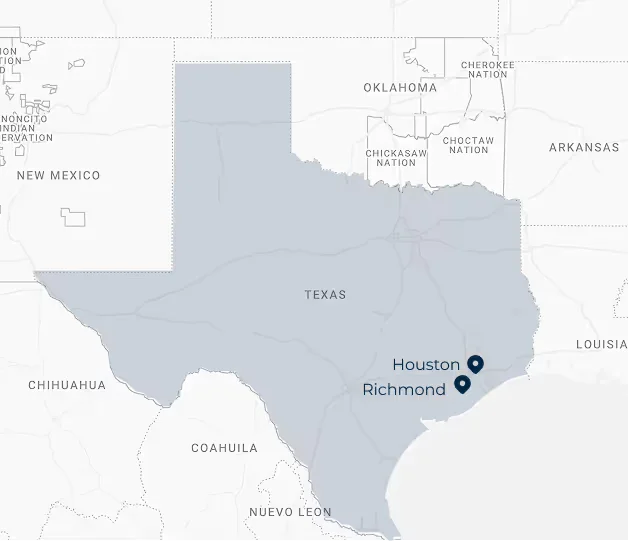
Our firm is based in Houston and primarily serves clients throughout Harris County, including Pasadena, South Houston, Deer Park, and La Porte. We also represent individuals and families in Fort Bend, Montgomery, Galveston, Brazoria, Waller, Wharton, and Austin counties.
- Harris County
- Austin County
- Brazoria County
- Fort Bend County
- Galveston County
- Montgomery County
- Waller County
- Wharton County
Houston Office: 440 Louisiana St, Suite 977 Houston, TX 77002
Frequently Asked Questions About Family Law in Pasadena, TX
Most Texas divorces use the no-fault ground of insupportability, meaning the marriage has become unworkable, and there is no reasonable expectation of reconciliation. Fault grounds can include cruelty, adultery, felony conviction, abandonment, living apart, and confinement in a mental hospital. The ground claimed may affect settlement strategy and, in some cases, property division.
Not automatically. Texas Family Code Chapter 7 requires a division the court considers "just and right," which can account for factors such as each spouse's earning capacity, fault in the marriage breakdown, and which spouse has primary custody of the children.
Texas generally calculates guideline child support from the paying parent's monthly net resources. Under Texas Family Code Section 154.125, the standard percentages are 20% for one child, 25% for two, 30% for three, 35% for four, and 40% for five. For six or more children, support cannot be less than the amount for five. Different rules may apply based on income and support obligations to children in another household.
Family law fees depend on the type of case, disputed issues, anticipated court work, and how much time the matter requires. Longworth Law Firm discusses the applicable retainer or fee arrangement before representation begins so the client knows the initial cost structure.
Yes. Texas courts can modify certain custody, visitation, and support orders when circumstances have changed enough to justify revisiting the current terms. What must be shown depends on the type of order and the change being requested.
Whether a case settles or goes to trial usually depends on how far apart the parties are on property, custody, or support, and whether both sides are willing to negotiate in good faith. Even while settlement talks continue, a hearing may still be necessary for urgent issues like temporary support or a protective order.
Court documents from any existing case, recent financial records such as tax returns and pay stubs, property information, and a written timeline of key events all help, though you can begin a case without every document in hand.
Bring Your Family Law Questions to Our Team
A family law case can raise questions about children, property, support, safety, or an existing court order. Our attorneys explain the process, the likely timeline, and the fee structure before any commitment is made. Contact Longworth Law Firm today to set up a time to talk.