
.avif)
.avif)
.avif)
.svg) 15+ Years
15+ Years
of Family Law Experience.svg) 2,000+ Cases
2,000+ Cases
on Family Law Resolved A+ Google
and BBB Rating.svg) Extensive Local
Extensive Local
Courts Expertise
Experienced Legal Representation for Parental Relocation Cases
When life circumstances require relocation with your children, complex legal challenges can arise that threaten your family's future. At Longworth Law Firm, we bring 15 years of family law experience and unique insight from Daryl Longworth's 28-year background as a Houston Police Lieutenant to parental relocation cases throughout Harris County and surrounding areas.
Our firm understands that relocation decisions often involve more than just legal considerations. They frequently stem from safety concerns, career opportunities, or family support needs. Daryl's law enforcement background provides a valuable perspective for cases involving domestic violence, stalking, or other safety-related relocations. We combine aggressive legal advocacy with compassionate guidance to protect both your parental rights and your children's best interests.
With our A+ BBB rating, recognition from Houstonia Magazine as a Top Lawyer, and commitment to 24/7 availability, we're prepared to handle the most challenging relocation disputes while keeping your family's well-being as our primary focus.

How Parental Relocation Works in Texas
Parental relocation occurs when a parent with custody rights seeks to move with their children to a new location, typically outside the geographic boundaries established in their existing custody order. In Texas, these moves can create significant legal complications, particularly when they affect the other parent's ability to maintain meaningful relationships with the children.
Texas law recognizes that parents have constitutional rights to travel and choose where to live. However, when children are involved, these rights must be balanced against the other parent's rights and, most importantly, the children's best interests. Understanding this balance is crucial for any parent considering relocation or facing a relocation request from their co-parent.
When Can a Parent Relocate with a Child
The ability to relocate with your children depends largely on the specific terms of your custody order and whether you have obtained necessary permissions. Parents with sole managing conservatorship typically have broader rights to determine their children's primary residence, while those in joint managing conservatorship arrangements usually face greater restrictions.
However, even parents with extensive rights cannot simply move freely if their custody order contains geographic restrictions. These restrictions commonly limit the children's residence to specific counties or areas to facilitate continued relationships with both parents. Violating these restrictions can result in serious legal consequences, including contempt of court findings and potential custody modifications.
Geographic Restrictions in Texas Custody Orders

Most Texas custody orders include geographic restrictions that limit where the child's primary residence can be located. In the Houston area, these restrictions often apply to Harris County and contiguous counties, including Fort Bend, Montgomery, Galveston, Brazoria, Waller, and Liberty.
Geographic restrictions serve to protect the non-custodial parent's access to their children while providing reasonable flexibility for the custodial parent's residential choices. These boundaries recognize that excessive travel distances can burden the non-custodial parent and disrupt the children's relationships with extended family, schools, and community connections.
When a desired move would exceed these geographic limitations, court approval is typically required regardless of the custody arrangement. This requirement applies whether you're moving across state lines or simply to another county within Texas that falls outside your order's permitted area.
Texas Parental Relocation Laws
Texas family law provides the legal framework for evaluating relocation requests through specific statutes and court-established precedents. Understanding these legal standards helps parents prepare stronger cases and set realistic expectations for relocation proceedings.
Chapter 156 of the Texas Family Code
Chapter 156 of the Texas Family Code governs modifications to existing custody orders, including those necessitated by parental relocation. This chapter establishes the procedural requirements for requesting modifications and the substantive standards courts must apply when evaluating relocation requests.
Under Section 156.101, modifications to custody orders are generally prohibited for one year after the original order unless specific circumstances exist. However, relocation situations often qualify for exceptions, particularly when the move serves the children's best interests or addresses safety concerns. The statute also addresses situations where parents have agreed to modifications or where emergency circumstances exist.
Material and Substantial Change Requirements

To obtain court approval for relocation, parents must typically demonstrate that a "material and substantial change" in circumstances has occurred since the original custody order. This legal standard requires showing that significant developments justify modifying the existing arrangement.
Common examples of material and substantial changes that support relocation include:
- Job relocation or significant employment opportunities
- Remarriage requiring relocation for family unity
- Educational opportunities for the parent or children
- Military deployment or reassignment
- Health reasons requiring specialized care or climate changes
- Safety concerns, including domestic violence or stalking
- Extended family support availability
The change must be more than merely convenient or preferable. It must represent a substantial shift in circumstances that makes relocation reasonable and beneficial for the family unit.
Best Interests of the Child Standard
Texas courts evaluate all custody-related decisions, including relocation requests, using the "best interests of the child" standard. This comprehensive evaluation considers numerous factors to determine whether the proposed move serves the children's overall well-being.
The best interests analysis examines both the immediate and long-term effects of relocation on the children's physical, emotional, and developmental needs. Courts consider the quality of relationships with both parents, the stability of proposed living arrangements, educational opportunities, and the children's own preferences when age-appropriate.
Factors Considered by Judges in Relocation Cases

Harris County family courts apply a thorough analysis when evaluating parental relocation requests. Understanding these factors helps parents present stronger cases and anticipate potential challenges to their relocation plans.
Reasons for Moving
The motivation behind your relocation request significantly influences how courts evaluate your case. Legitimate, compelling reasons for moving strengthen your position, while moves that appear motivated by desires to limit the other parent's access typically face skeptical review.
Courts view relocations favorably for:
- Significant career advancement or employment opportunities
- Educational pursuits that improve family circumstances
- Health-related needs requiring specialized care
- Military service requirements
- Safety considerations, including domestic violence situations
- Reunification with extended family support systems
Conversely, moves primarily motivated by new romantic relationships, general dissatisfaction with the current location, or apparent attempts to interfere with the other parent's access receive closer scrutiny and may be subject to objections.
Impact on Parent-Child Relationships
Courts carefully evaluate how relocation will affect the children's relationships with both parents. This analysis extends beyond simple visitation logistics to consider the quality and meaningfulness of these relationships.
Factors examined include:
- Current involvement level of the non-relocating parent
- Practical ability to maintain relationships across distance
- Financial capacity to accommodate travel expenses
- Children's attachment to both parents and extended family
- Historical patterns of parental cooperation and conflict
- Willingness to facilitate ongoing relationships
Parents seeking relocation must typically propose revised visitation arrangements that preserve meaningful contact with the non-relocating parent. These proposals often include extended summer visits, holiday arrangements, and provisions for regular communication.
Child's Preference (Age 12+)

Texas courts may consider the preferences of children aged 12 and older when evaluating relocation requests. However, children's wishes are just one factor among many and don't automatically determine the outcome.
Courts evaluate children's preferences in light of their maturity, understanding of the situation, and potential influence from either parent. Children who express clear, thoughtful preferences based on legitimate concerns receive greater consideration than those who appear coached or influenced by parental conflict.
The weight given to children's preferences increases with their age and demonstrated maturity. Teenagers' viewpoints typically receive more consideration than those of younger adolescents, particularly regarding their own educational and social needs.
Educational and Social Opportunities
The quality of educational and social opportunities in the proposed new location, compared with the current area, significantly impacts relocation evaluations. Courts examine both immediate and long-term educational prospects for the children.
Consideration factors include:
- Quality of available schools and educational programs
- Special needs services and accommodations
- Extracurricular activity availability
- Cultural and enrichment opportunities
- Social support systems and community connections
- Economic opportunities in the new area
Relocations that demonstrably improve children's educational prospects or provide enhanced opportunities for their talents and interests receive favorable consideration. However, moves that would disrupt established educational programs or reduce opportunities may face objections.
Types of Custody Orders and Relocation Rights
The specific language and provisions in your custody order significantly influence your relocation rights and the procedures required to obtain permission for moves outside established geographic boundaries.
Sole Managing Conservatorship
Parents appointed as sole managing conservators typically possess broader authority to determine their children's primary residence. However, even sole conservators must comply with any geographic restrictions included in their orders and consider the other parent's visitation rights.
Sole managing conservators generally have the exclusive right to:
- Determine the child's primary residence
- Make major decisions regarding education and healthcare
- Consent to medical treatment and educational services
- Choose the child's primary care providers and schools
Despite these broad rights, sole conservators cannot simply relocate without consideration of existing geographic restrictions or the possessory conservator's access rights. Relocations that substantially interfere with established visitation schedules may require court approval or modification of existing arrangements.
Joint Managing Conservatorship

Joint managing conservatorship arrangements, which Texas law presumes serve children's best interests, typically involve shared decision-making authority and more restrictive relocation rights. These arrangements recognize both parents' ongoing roles in their children's lives.
In joint conservatorship cases, one parent usually has the exclusive right to determine the child's primary residence, but this right is subject to geographic limitations designed to preserve the other parent's meaningful access. Relocation requests in joint conservatorship cases often require:
- Agreement from the other parent, or
- Court approval through formal modification proceedings
- Demonstration that the move serves the children's best interests; and
- Proposed arrangements for maintaining the other parent's relationship.
Geographic Restrictions in Custody Orders
Geographic restrictions define the boundaries within which the child's primary residence must remain. These restrictions balance the custodial parent's residential freedom with the non-custodial parent's access rights and the children's need for stability.
Common geographic restriction patterns in Harris County include:
- Harris County only
- Harris County and contiguous counties
- Specific school district boundaries
- Metropolitan Houston area definitions
- State of Texas, with specific county exclusions
Understanding your specific geographic restrictions is crucial before planning any move, as violations can result in serious legal consequences, including contempt findings, custody modifications, and potential loss of decision-making authority.
The Relocation Process in Harris County
Successfully navigating parental relocation in Harris County requires understanding the specific procedures, timelines, and legal requirements for obtaining permission to move beyond established geographic boundaries.
Obtaining Permission from the Other Parent

The simplest path to relocation approval is to obtain a written agreement from the other parent. This cooperative approach avoids costly litigation and lengthy proceedings while maintaining family relationships.
When negotiating parental agreement, consider addressing:
- Revised visitation schedules accommodating distance
- Transportation arrangements and expense allocation
- Communication protocols for ongoing parent-child contact
- Holiday and summer vacation arrangements
- Decision-making authority modifications if necessary
- Child support adjustments reflecting changed circumstances
Written agreements should be incorporated into modified court orders to ensure legal enforceability. Even friendly agreements benefit from legal review to ensure they adequately protect everyone's interests and comply with Texas law requirements.
Filing a Motion to Modify
When parental agreement cannot be reached, formal court proceedings become necessary. The process typically begins with filing a Motion to Modify the existing custody order, specifically requesting permission to relocate with the children.
Your motion should include:
- Detailed explanation of reasons necessitating relocation
- Evidence supporting the material and substantial change claim
- Proposed new visitation arrangements preserving the other parent's rights
- Documentation of the benefits the move provides to the children
- Financial information supporting your ability to provide for the children
- Evidence demonstrating your commitment to maintaining the co-parenting relationship
Comprehensive preparation strengthens your position and demonstrates good faith efforts to address the other parent's concerns while serving the children's best interests.
Court Hearings and Evidence

Relocation hearings require thorough preparation and presentation of compelling evidence supporting your request. Courts evaluate testimony, documentary evidence, and witness statements when making relocation decisions.
Effective evidence typically includes:
- Employment offers or transfer documentation
- Educational opportunity information
- Medical records supporting health-related moves
- Safety documentation for protection-based relocations
- Character witnesses attesting to your parenting abilities
- Children's school records and extracurricular involvement
- Financial documentation showing improved circumstances
Daryl Longworth's law enforcement background provides unique advantages in relocation cases involving safety concerns, domestic violence, or stalking situations. His experience investigating and documenting these issues provides compelling evidence supporting protection-based relocations.
Long-Distance Visitation Arrangements
Successful relocation cases typically include comprehensive proposals for maintaining the non-relocating parent's meaningful relationship with the children. These arrangements must balance practical considerations with the children's emotional needs.
Effective long-distance visitation plans often include:
- Extended summer visitation periods (4-6 weeks)
- Alternating major holidays and school breaks
- Additional weekend visits during the school year when practical
- Regular communication schedules via phone, video calls, and messaging
- Transportation arrangements and expense allocation
- Flexibility provisions for special occasions and emergencies
- Annual review and adjustment procedures

Why Choose Longworth Law Firm
for Parental Relocation Cases
.svg)
Experience in Harris County Family Courts
With 15 years of family law practice concentrated in Harris County, we understand the local courts' procedures, preferences, and decision-making patterns. This familiarity enables us to present cases more effectively and anticipate potential challenges specific to Houston-area family courts.
Our Harris County experience includes:
- Regular appearances before all family court judges
- Understanding of local rules and procedural preferences
- Established relationships with court personnel and staff
- Knowledge of mediation resources and alternative resolution options
- Familiarity with local experts and evaluation providers
Understanding of Complex Relocation Issues
Relocation cases often involve multiple overlapping legal and practical issues requiring comprehensive analysis and strategic planning. Our experience handling complex family law matters enables us to address all aspects of relocation disputes effectively.
We regularly handle relocations involving:
- High-asset families with complex financial arrangements
- Military deployment and reassignment situations
- Business relocation and employment transfer requirements
- Safety-based moves involving domestic violence or stalking
- Medical necessity relocations for specialized care
- Educational opportunity relocations for children with special talents
Protecting Your Parental Rights
Whether you're seeking permission to relocate or fighting to prevent an unwanted move, protecting your parental rights and your relationship with your children remains our primary focus. We balance aggressive legal advocacy with practical problem-solving to achieve outcomes that serve your family's long-term interests.
Our unique advantage comes from Attorney Longworth's law enforcement background, which provides valuable insight into cases involving:
- Safety concerns and threat assessment
- Documentation and evidence gathering for protection-based moves
- Understanding of stalking, harassment, and domestic violence dynamics
- Coordination with law enforcement agencies when necessary
- Strategic planning for high-conflict situations
Proudly Serving
the Greater Houston Area
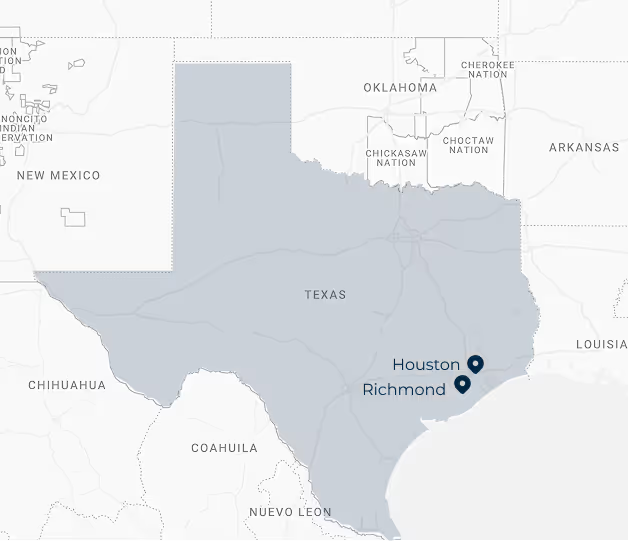
Our firm is based in the heart of Houston and primarily serves clients throughout Harris County. We also proudly extend our top-tier legal services to individuals and families in Fort Bend, Montgomery, Galveston, Brazoria, Waller, Wharton, and Austin counties.
- Harris County
- Austin County
- Brazoria County
- Brazos County
- Fort Bend County
- Galveston County
- Montgomery County
- Waller County
- Wharton County
Houston Office: 440 Louisiana St, Suite 977 Houston, TX 77002
Frequently Asked Questions
The distance you can move depends on the specific geographic restrictions in your custody order. Common restrictions limit residence to Harris County and its contiguous counties, or to specific metropolitan areas. Moving beyond these boundaries typically requires either the other parent's agreement or court approval, regardless of the actual distance involved.
Even moves within permitted boundaries can require court intervention if they substantially interfere with existing visitation arrangements or create practical barriers to the other parent's relationship with the children.
When both parents agree to relocation, the process becomes significantly simpler, but formal legal procedures are still necessary to ensure the arrangement is legally enforceable. Written agreements should address revised custody schedules, visitation arrangements, transportation responsibilities, and support modifications.
These agreements should be incorporated into a modified court order to ensure enforceability and provide clear guidance for future issues. Even cooperative agreements benefit from legal review to ensure they adequately address all necessary provisions and protect everyone's long-term interests.
The timeline for relocation cases varies significantly depending on whether parents can reach an agreement or formal court proceedings become necessary. Agreed relocations can often be completed within 60-90 days, while contested cases typically take 6 to 12 months or longer.
Factors affecting the timeline include:
- Court scheduling and docket congestion
- Complexity of disputed issues
- Need for expert evaluations or testimony
- Discovery requirements and evidence gathering
- Mediation scheduling and success
- Appeals or additional legal challenges
While new relationships don't automatically disqualify relocation requests, moves primarily motivated by romantic relationships are subject to greater scrutiny by courts. Successful relocation cases typically require compelling reasons beyond personal relationships, such as employment opportunities, educational benefits, or family support needs.
Courts examine the stability and permanence of new relationships, the impact on children's existing relationships, and whether the move truly serves the children's best interests rather than just the moving parent's personal desires.
Relocating without proper permission violates court orders and can result in serious legal consequences, including contempt of court, custody modifications, and emergency orders requiring the children's return. These violations often undermine your credibility with the court and can adversely affect future custody decisions.
If circumstances require an emergency move for safety reasons, seek immediate legal counsel to address the situation properly and protect your legal standing while ensuring your family's safety.
Schedule Your Confidential Case Evaluation Today
We serve clients throughout Harris County and surrounding areas, including Fort Bend, Montgomery, Waller, Wharton, Galveston, Brazoria, and Austin counties. Our 24/7 availability ensures you can reach us when urgent relocation issues arise that can't wait for business hours.