
.avif)
Houston Military Divorce Attorney
Members
Through Complex
Divorce Proceedings
.avif)
.avif)
.svg) 15+ Years
15+ Years
of Family Law Experience.svg) 2,000+ Cases
2,000+ Cases
on Family Law Resolved A+ Google
and BBB Rating.svg) Extensive Local
Extensive Local
Courts Expertise
Trusted Legal Guidance for Military Divorces in Houston
At Longworth Law Firm, we understand the unique challenges service members and military spouses face when navigating divorce in Houston. Founded by former Houston Police Lieutenant Daryl Longworth, our firm brings 15 years of family law experience combined with a deep understanding of military life and service obligations. We recognize that military divorces involve federal protections, deployment considerations, and benefit complexities that civilian attorneys often overlook.
Our law enforcement background provides valuable insight when representing military families, particularly in cases involving safety concerns, high-conflict situations, or complex custody arrangements during deployments. We're available 24/7 because military schedules don't follow business hours, and urgent legal matters can't wait for Monday morning.

Why Military Divorce Is Different in Houston
Military divorces in Texas involve a complex interplay between state family law and federal military regulations. Service members face unique challenges that require attorneys familiar with both legal systems and the practical realities of military life.
Federal and State Law Jurisdiction Complexities
Military divorces must navigate both Texas state law and federal military regulations. While divorce proceedings are handled under Texas family law, issues such as benefit division, service member protections, and military housing fall under federal jurisdiction. This dual legal framework requires attorneys who understand how these systems interact and affect your specific situation.
Texas is a community property state, meaning assets acquired during marriage are generally divided equally. However, military benefits, retirement pay, and allowances are subject to special federal protections that can affect property division. Understanding these nuances is crucial for protecting your financial interests during divorce proceedings.
Service Member Protections and Rights
The Servicemembers Civil Relief Act (SCRA) provides crucial protections for active-duty military members during divorce proceedings. This federal law prevents default judgments when service members are unable to participate in court proceedings due to military duties. If you're deployed or on active duty, the court must postpone proceedings upon request, ensuring you have adequate time to respond and participate in your divorce case.
These protections extend beyond simple delays. The SCRA ensures that military obligations don't prevent you from protecting your parental rights, property interests, or other legal concerns during divorce. However, these protections must be properly invoked and managed by attorneys familiar with the requirements of military law.
Deployment and Residency Challenges
Frequent relocations and deployments create unique jurisdictional questions for military families. Texas law allows military members to file for divorce if they've established Texas as their legal residence, even when stationed elsewhere. This flexibility benefits military families by allowing them to proceed with a divorce in a familiar jurisdiction rather than in the jurisdiction where they're currently stationed.
Deployment schedules affect every aspect of military divorce, from court hearing availability to child custody arrangements. Courts must balance legal timelines with military obligations, often requiring creative scheduling and virtual participation options to accommodate service requirements.
Key Military Divorce Laws in Texas

Military divorces involve specialized federal laws that work alongside Texas family law to protect service members and their families during divorce proceedings.
Servicemembers Civil Relief Act (SCRA) Protections
The SCRA provides essential legal protections for active-duty service members, including the right to request postponement of legal proceedings when military duties prevent participation. This protection extends to divorce cases, custody matters, and other family law proceedings.
Key SCRA protections include:
- Right to request a 90-day postponement of court proceedings during active duty.
- Protection against default judgments when unable to appear due to military service.
- Extensions available for continued military obligations.
- Application to National Guard members on federal orders exceeding 30 days.
Understanding these protections helps ensure your military service doesn't compromise your legal rights during divorce proceedings. However, SCRA protections must be properly requested and documented to be effective.
Uniformed Services Former Spouse Protection Act (USFSPA)
The USFSPA governs the division of military retirement benefits and ensures former spouses can receive their share of military pensions. This federal law allows state courts to divide military retirement pay as marital property, but specific requirements must be met for former spouses to receive direct payments from the military.
The "10-year rule" requires that marriages lasting at least 10 years concurrent with military service be eligible for direct payment of retirement benefits to former spouses. However, courts can still award portions of military retirement in divorces of shorter duration. The difference is in payment method rather than entitlement.
Former spouses may also retain certain military benefits, including commissary privileges, medical care, and military housing, depending on the length of the marriage and other qualifying factors.
Texas Residency Requirements for Military Families
Texas offers flexibility for military families regarding residency requirements for divorce filing. Service members can establish Texas as their legal residence and file for divorce here, even if stationed elsewhere, provided they meet the basic residency requirements.
To file for military divorce in Texas, either spouse must have:
- Resided in Texas for at least six months before filing
- Lived in the county where filing for at least 90 days
These requirements recognize that military service often requires physical absence from legal residence. Texas courts have experience handling military divorce cases and understand the unique circumstances facing military families.
Division of Military Benefits and Property

Military divorce requires careful attention to unique assets and benefits that don't exist in civilian marriages. Proper identification and division of these benefits protects both spouses' financial futures.
Military Retirement and Pension Division
Military retirement benefits represent significant marital assets that require specialized handling during divorce. The military uses different retirement systems depending on service dates, and courts must understand these distinctions when dividing benefits.
Current service members may participate in the High-36 retirement system, the Military Retirement Reform Act (REDUX), or the Blended Retirement System (BRS), each with different calculation methods and benefit structures. Courts consider the length of marriage, the length of service, and the timing of benefit accrual when determining an appropriate division.
Qualified Domestic Relations Orders (QDROs) are typically required for the division of retirement benefits, and these documents must meet both court requirements and military payment system standards. Proper preparation of these orders prevents delays and ensures accurate benefit payments after divorce.
TRICARE and Healthcare Benefits
Military healthcare benefits through TRICARE present unique considerations during divorce proceedings. Service members maintain TRICARE coverage, but former spouses' eligibility depends on specific circumstances and the duration of the marriage.
The "20/20/20 rule" provides unlimited TRICARE coverage for former spouses who were married to a service member for at least 20 years and who have at least 20 years of creditable service, with at least 20 years of marriage overlapping with the service member's military service. Former spouses meeting these requirements retain full military healthcare benefits indefinitely, provided they don't remarry before age 55.
Former spouses not meeting the 20/20/20 rule may qualify for temporary TRICARE coverage through the Continued Health Care Benefit Program (CHCBP), which provides transitional coverage for up to 36 months after divorce.
Housing Allowances and Military-Specific Assets
Military families receive various allowances and benefits that must be addressed during divorce proceedings. Basic Allowance for Housing (BAH), Basic Allowance for Subsistence (BAS), and other military-specific compensation affect both property division and support calculations.
Military housing, whether on-base or supported by BAH, involves unique considerations during divorce. Spouses living in military housing typically must vacate within 30 days of separation unless they qualify for extended housing privileges. Understanding these timelines helps prevent housing emergencies during divorce proceedings.
Thrift Savings Plan (TSP) accounts, military-specific insurance policies, and survivor benefit options require careful attention during property division negotiations. These benefits often have substantial value but are subject to federal regulations that limit division options.
Community Property Implications in Texas
Texas community property law applies to military marriages, but federal military benefits receive special treatment under various federal statutes. This creates complex interactions between state property division rules and federal benefit protections.
Military pay, allowances, and benefits earned during marriage generally constitute community property subject to division. However, federal law governs how certain benefits can be divided and paid, sometimes limiting state court authority over specific assets.
Separate property owned before marriage or acquired by gift or inheritance retains its separate character, but military families often intermingle separate and community assets, requiring careful analysis during divorce proceedings.
Military Child Support Calculations

Military child support follows Texas guidelines but requires special attention to military-specific income sources and unique family circumstances.
Texas Guidelines for Military Income
Child support calculations for military families include base pay and allowances, such as BAH and BAS, when determining gross income. This comprehensive approach ensures support calculations reflect the military parent's actual financial resources rather than just base salary.
Military income for support purposes typically includes:
- Base pay and any special pay categories
- Basic Allowance for Housing (BAH) – the full amount regardless of actual housing costs
- Basic Allowance for Subsistence (BAS)
- Family Separation Allowance when applicable
- Special duty pay or hazardous duty pay
Variable income, such as combat pay exclusions or temporary duty payments, may require special consideration depending on their frequency and predictability.
Base Pay, Allowances, and Benefit Considerations
Military compensation structures differ significantly from civilian employment, requiring careful analysis to ensure accurate support calculations. Courts must distinguish between taxable and non-taxable income sources while ensuring that support orders reflect the actual income available to the obligor.
Combat pay exclusions create unique situations in which service members may temporarily exclude income from taxation, but that income generally remains countable for child support purposes. Courts balance these considerations to ensure adequate child support without creating undue hardship.
Enforcement Across State Lines and Deployments
Military families frequently relocate, requiring child support orders that can be enforced across state boundaries. The Uniform Interstate Family Support Act (UIFSA) provides mechanisms for interstate enforcement, while military regulations require service members to comply with support orders regardless of duty location.
Military administrative remedies can supplement court enforcement through mechanisms such as:
- Automatic allotments from military pay
- Security clearance implications for unpaid support
- Administrative actions through the military chain of command
- Coordination between military and civilian enforcement agencies
These multiple enforcement mechanisms generally make military child support more reliable than civilian support arrangements, provided orders are properly structured and registered.
Protecting Your Rights During Military Divorce
Military divorce requires proactive protection of rights that may be affected by unique military circumstances and federal regulations.
Active Duty Service Member Protections
Active-duty service members have specific legal protections during divorce proceedings, but these protections must be properly invoked and managed. The SCRA provides the foundation for service member protections, but additional military regulations and policies offer additional safeguards.
Service members should understand their rights regarding:
- Court proceeding postponements during military obligations
- Protection against default judgments for military-related absences
- Rights to legal representation and access to military legal assistance
- Notification requirements for legal proceedings affecting military benefits
- Administrative remedies available through military channels.
Proper assertion of these protections prevents adverse outcomes arising from military service obligations while ensuring that legal proceedings remain fair and accessible.
Spouse Benefit Preservation

Military spouses face unique challenges in preserving their rights to military benefits during divorce proceedings. Many benefits have specific eligibility requirements or time limitations that require immediate attention during divorce proceedings.
Key areas requiring protection include:
- Healthcare coverage continuation through TRICARE or CHCBP
- Military retirement benefit entitlements
- Survivor Benefit Plan enrollment and coverage
- Military housing privileges and transition assistance
- Commissary, exchange, and base access privileges
Understanding eligibility requirements and deadlines prevents the loss of valuable benefits due to inadvertent delays or oversights during divorce proceedings.
Legal Representation During Deployment
Service members facing divorce while deployed or on extended duty assignments need legal representation that can function effectively despite geographic separation. Modern communication technology enables effective attorney-client relationships even during deployment, but special arrangements are often necessary.
Deployed service members should ensure their attorneys have:
- Reliable communication methods for secure consultation
- Power of attorney or other authority for court appearances
- Understanding of deployment schedules and communication limitations
- Coordination with military legal assistance offices when appropriate
- Capability to handle urgent matters during communication blackouts
Proper planning prevents deployment from compromising legal representation or resulting in adverse outcomes due to communication difficulties.

Why Choose Longworth Law Firm
for Your Military Divorce
Law Enforcement and Military Understanding
Our founder's 28 years as a Houston Police Lieutenant provide unique insight into the challenges facing military and law enforcement families during divorce. This experience translates to a practical understanding of shift work, dangerous duty assignments, and the stress these careers place on family relationships.
We understand that military families face unique pressures, including frequent relocations, deployment separations, and the demands of military culture. Our approach combines legal knowledge with a practical understanding of military life, ensuring representation that addresses both legal requirements and real-world challenges faced by military families.
Federal and State Law Integration
Military divorce requires seamless integration of federal military law with Texas family law. Our experience handling military divorce cases enables us to understand how federal protections interact with state divorce proceedings and to leverage both systems to benefit our clients.
We maintain current knowledge of military regulations, benefit structures, and federal law changes that affect military families. This comprehensive understanding prevents costly oversights and ensures military-specific benefits and protections are properly addressed during divorce proceedings.
24/7 Availability for Military Schedules
Military life doesn't follow civilian business hours, and urgent legal matters often arise during deployments, training exercises, or duty assignments. Our 24/7 availability ensures military families can access legal guidance when they need it, regardless of time zones or duty schedules.
We use secure communication methods that function during deployments and understand the communication limitations service members face during certain assignments. This flexibility ensures consistent legal representation despite the unpredictable nature of military obligations.
Transparent Approach to Complex Cases
Military divorces often involve complex benefit calculations, property valuations, and custody arrangements that can seem overwhelming. We provide clear explanations of your rights, options, and likely outcomes, ensuring you understand the process and can make informed decisions about your future.
Our transparent approach includes detailed discussions of costs, timelines, and potential complications specific to military divorce cases. We believe informed clients make better decisions and achieve better outcomes in their divorce proceedings.
Proudly Serving the
Greater Houston Area
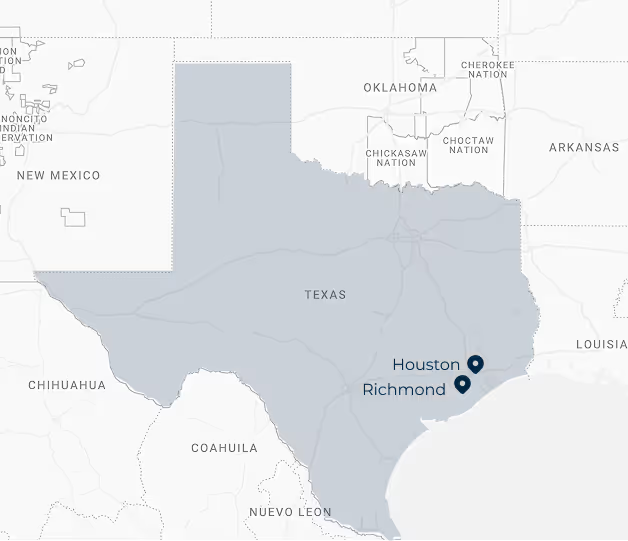
Our firm is based in the heart of Houston and primarily serves clients throughout Harris County, including military families stationed at Ellington Field Joint Reserve Base. We also extend our services to individuals and families in Fort Bend, Montgomery, Galveston, Brazoria, Waller, Wharton, and Austin counties.
- Harris County
- Austin County
- Brazoria County
- Brazos County
- Fort Bend County
- Galveston County
- Montgomery County
- Waller County
- Wharton County
Houston Office: 440 Louisiana St, Suite 977 Houston, TX 77002
Frequently Asked Questions About
Houston Military Divorce
Yes, Texas allows military members to file for divorce if they've established Texas as their legal residence, even when stationed in other states or overseas. You must meet standard residency requirements: residence in Texas for at least six months and in the filing county for at least 90 days.
Military orders or duty assignments don't change your legal residence unless you specifically take steps to establish a new legal domicile. Many service members maintain Texas residence throughout their military careers, allowing them to file for divorce in Texas courts regardless of their current duty station.
Military benefit division depends on numerous factors, including marriage length, service duration, and specific benefit types. Some benefits, like retirement pay, can be divided between spouses, while others remain solely with the service member.
Healthcare benefits through TRICARE may continue for former spouses meeting specific requirements. The "20/20/20 rule" provides unlimited TRICARE for former spouses married at least 20 years to service members with at least 20 years of service, provided at least 20 years of marriage overlapped with military service.
Military housing, commissary privileges, and base access typically terminate upon divorce, though some transitional assistance may be available. Understanding these timelines prevents disruption of essential services during divorce proceedings.
Deployment requires temporary modification of custody schedules, but federal law prevents permanent custody changes based solely on deployment. The Military Parent and Child Protection Act specifically prohibits courts from treating deployment as evidence of unfitness or grounds for permanent custody modification.
Successful military custody arrangements include provisions for deployment periods, such as extended pre-deployment time with children, virtual visitation during deployment, and make-up time upon return. Family Service Plans may provide temporary care arrangements during deployment.
Courts generally support arrangements that maintain parent-child relationships despite deployment, provided children's best interests remain the primary consideration. Proper planning prevents custody disputes and ensures stability for children during challenging separations.
Military divorce involves federal laws, military regulations, and benefit structures that general family law attorneys may not fully understand. The interaction between federal military law and state family law creates complexities that require advanced legal knowledge for proper representation.
Benefits like military retirement, TRICARE coverage, and survivor benefits are subject to federal regulations that affect their division and preservation. Military-specific protections under the SCRA and other federal laws require proper invocation and management to be effective.
An attorney with years of experience with military divorce understands these unique aspects and can provide representation that addresses both legal requirements and practical military family concerns. This advanced legal knowledge often results in better protection of your rights and more favorable outcomes.
Military divorces in Texas are subject to the same minimum 61-day waiting period as civilian divorces, but the actual timeline depends on complexity and whether deployment or military obligations affect court scheduling.
Uncontested military divorces may resolve relatively quickly once the waiting period expires, while contested cases involving complex benefit division or custody disputes may take 6 to 12 months or longer. Deployment can extend timelines, but courts generally accommodate military schedules when possible.
SCRA protections may extend proceedings when service members cannot participate due to military obligations, but these extensions serve to protect service members' rights rather than unnecessarily delay proceedings.
Military retirement benefits earned during marriage are generally subject to division as community property in Texas. However, division doesn't automatically mean a 50/50 split – courts consider various factors when determining "just and right" division.
The portion of retirement benefits subject to division typically corresponds to the overlap between marriage and military service. For example, if you served 20 years, including 15 during marriage, approximately 75% of your retirement benefits would be subject to division.
Federal law governs how military retirement benefits can be paid to former spouses, with different rules applying depending on the length of the marriage and the service duration. Understanding these federal regulations helps protect your interests during benefit division negotiations.
Schedule Your Confidential Military Divorce Consultation
Our law enforcement background and military family experience provide the insight you need during this challenging time. Call us today to protect your military benefits, parental rights, and financial future.