
.avif)
.avif)
.avif)
.svg) 15+ Years
15+ Years
of Family Law Experience.svg) 2,000+ Cases
2,000+ Cases
on Family Law Resolved A+ Google
and BBB Rating.svg) Extensive Local
Extensive Local
Courts Expertise
Affordable & Experienced Uncontested Divorce Legal Representation
At Longworth Law Firm, we specialize in helping Houston couples get through uncontested divorces with dignity and efficiency. Our founder, Daryl Longworth, brings 15 years of advanced family law knowledge and 28 years of Houston Police experience to every case. We combine exceptional legal skill with practical approaches to minimize stress and costs.
Our firm is recognized for client-focused service, transparent pricing, and our commitment to using technology that makes the legal process more accessible. We're available 24/7 for the questions that can't wait until business hours.

What is an Uncontested Divorce in Houston, Texas?
An uncontested divorce occurs when both spouses reach complete agreement on all aspects of their separation before filing for divorce. This cooperative approach means you and your spouse have resolved all issues, including property division, debt allocation, child custody arrangements (if applicable), child support, and spousal maintenance.
Unlike contested divorces that involve court battles and prolonged litigation, uncontested divorces focus on implementing mutually acceptable terms through proper legal channels. This approach typically results in faster resolution, significantly lower costs, and reduced emotional strain for everyone involved.
Uncontested vs. Contested Divorce in Texas
The key difference between an uncontested and a contested divorce lies in whether the spouses agree on the terms. In contested divorces, disagreements require court intervention, resulting in longer timelines, higher legal fees, and often increased conflict. The court ultimately decides unresolved issues.
Uncontested divorces, by contrast, put you in control. You and your spouse determine the outcome rather than leaving decisions to a judge who doesn't know your family's specific needs. With both parties in agreement, the legal process becomes primarily administrative — ensuring your arrangements are properly documented and legally enforceable.
Agreed Divorce Terminology Explained
Texas legal terminology can be confusing. You may hear terms like "agreed divorce," "uncontested divorce," or "amicable divorce" used somewhat interchangeably. While there are subtle differences, these terms generally refer to divorces in which spouses have reached an agreement on all issues before filing.
The Texas Family Code doesn't actually use the term "uncontested divorce," but rather refers to divorces where a waiver of service is filed and the respondent doesn't contest the petition. Understanding these distinctions helps you navigate conversations with legal professionals and court personnel more effectively.
When Uncontested Divorce is the Right Choice
Uncontested divorce works best when:
- You and your spouse can communicate respectfully about divorce matters
- Both parties agree that the marriage should end
- You've reached consensus on property division, debt allocation, and child-related matters
- Neither spouse seeks to assign blame through fault-based grounds
- You both prioritize an efficient, cost-effective resolution
- You want to maintain privacy about personal financial matters
- You wish to minimize emotional strain and conflict
While an uncontested divorce offers many advantages, it isn't suitable for every situation. Relationships involving domestic violence, significant power imbalances, hidden assets, or high conflict typically require the additional protections of traditional divorce proceedings.
Requirements for Filing an Uncontested Divorce in Harris County
Before pursuing an uncontested divorce in Houston, you must meet specific eligibility requirements established by Texas law and ensure you have an agreement on all necessary issues.
Texas Residency Requirements for Divorce
Texas law requires that either you or your spouse must have:
- Lived in Texas for at least the past six months
- Resided in Harris County for at least the past 90 days
These residency requirements apply to all divorces in Texas, whether contested or uncontested. If you recently moved to Houston, you may need to wait until you satisfy these timeframes before filing.
Issues You Must Agree on Before Filing
For your divorce to qualify as truly uncontested, you and your spouse must have reached complete agreement on all relevant matters:
- Division of all marital property (homes, vehicles, bank accounts, investments, retirement accounts, personal belongings)
- Allocation of all debts (mortgages, auto loans, credit cards, student loans, medical bills)
- If you have children: custody arrangements, visitation schedules, child support amounts
- Whether either spouse will receive temporary or permanent spousal support
- Who will pay for health insurance, and how healthcare expenses will be handled
- Division of any business interests or complex assets
- Tax considerations, including filing status and dependency exemptions
- Any pet custody arrangements
If disagreement exists on any of these issues, your divorce cannot proceed as uncontested. However, mediation or collaborative law approaches may help you reach the necessary agreements.
Estate and Financial Considerations
At Longworth Law Firm, we've found that an uncontested divorce works best for couples with relatively straightforward financial situations. While we handle estates of all sizes, uncontested approaches become more challenging with:
- Substantial marital assets exceeding $1 million
- Multiple real estate properties
- Complex ownership interests in businesses
- Significant retirement assets requiring Qualified Domestic Relations Orders (QDROs)
- International or out-of-state property holdings
- Substantial inheritance or trust considerations
This doesn't mean couples with complex financial situations can't pursue an uncontested divorce. It’s just that those types of cases require extensive documentation and careful review to ensure all assets are properly addressed and agreements are legally sound.
What Disqualifies You from Uncontested Divorce
Even with the best intentions, certain circumstances make an uncontested divorce inappropriate:
- Disagreement on any significant divorce-related issue
- History of domestic violence or coercive control
- Concerns about hidden assets or financial dishonesty
- Significant power imbalances in the relationship
- Inability to communicate effectively about divorce matters
- Complex child custody situations requiring court evaluation
- Disagreement about the value of significant assets
If these factors apply to your situation, we can guide you toward alternative approaches that provide appropriate protections while still minimizing unnecessary conflict and expense.
Uncontested Divorce With Children: What you Need to Know
Divorces involving children present unique considerations even when parents agree on all terms. Special care must be taken to ensure children's needs are adequately addressed and legal requirements for child-related provisions are met.
Creating a Parenting Plan Both Parties Support
The cornerstone of divorce with children is a comprehensive, workable parenting plan that addresses how you'll co-parent after divorce. Effective parenting plans include:
- Detailed regular possession schedules (weekdays, weekends, summers)
- Holiday and special occasion arrangements
- Provisions for transportation and exchanges
- Communication protocols between parents
- Decision-making processes for major issues
- Conflict resolution methods
- Flexibility provisions for schedule adjustments
- Guidelines for introducing new partners
- Travel and relocation considerations
The best plans balance structure with flexibility, providing clear expectations while allowing reasonable adaptations as needs change.
Joint Managing Conservatorship in Texas
Texas courts presume that joint managing conservatorship (shared legal custody) serves children's best interests in most cases. This arrangement means that both parents retain the right to make significant decisions about their children's upbringing, even when one parent has primary physical custody.
Your decree should clearly specify which rights are shared and which, if any, are allocated exclusively to one parent. These include educational decisions, non-emergency healthcare, religious upbringing, and extracurricular activities.
Even in joint arrangements, one parent is typically designated as having the exclusive right to determine the child's primary residence, often within a specific geographic area to facilitate continued relationships with both parents.
Child Support Guidelines and Calculations
Texas uses percentage guidelines for calculating standard child support:
- 20% of net resources for one child
- 25% for two children
- 30% for three children
- 35% for four children
- 40% for five or more children
These percentages apply to the first $9,200 of monthly net resources (as of 2025), with discretionary adjustments for higher incomes.
While these guidelines provide a starting point, your agreement can incorporate different arrangements if they adequately provide for your children's needs and are approved by the court. Customized arrangements often account for:
- Shared parenting time
- Direct payment of significant expenses
- Special needs of children
- Educational expenses
- Income disparities between parents
The Houston Uncontested Divorce Process: Step By Step
Understanding exactly what happens in an uncontested divorce helps reduce anxiety and allows for better preparation. While each case has unique aspects, uncontested divorces in Harris County typically follow this predictable sequence.
The process begins with a consultation to understand your specific situation and confirm that an uncontested divorce is appropriate. Our case intake specialist will explain the legal requirements, potential complications, and what documentation you'll need to gather.
With your input, we'll prepare all necessary divorce documents, including the Original Petition for Divorce, Waiver of Service, and Final Decree of Divorce. We'll incorporate your agreements regarding property division, child custody arrangements (if applicable), and other relevant matters into these legally binding documents.
Once documents are prepared, we file the Original Petition for Divorce with the Harris County District Clerk, initiating your case officially. This petition contains basic information about your marriage, states the grounds for divorce (typically "insupportability" in uncontested cases), and outlines the relief requested.
The filing fee in Harris County is currently $350 with no children and $365 with children (as of 2025), though fee waivers may be available for financial hardship. Upon filing, your case is assigned a cause number and assigned to a specific family court in Harris County.
In contested divorces, the non-filing spouse must be formally served with divorce papers. For uncontested divorces, we simplify this process using a Waiver of Service, which your spouse signs voluntarily.
This waiver acknowledges receipt of the divorce petition and waives formal service requirements. Importantly, the waiver must be signed after the petition is filed and must be notarized to be valid. We coordinate this process to ensure all technical requirements are met.
Texas law imposes a mandatory 60-day "cooling off" period between filing for divorce and finalizing it. This waiting period applies to all divorces in Texas—even when both parties fully agree on all terms.
The waiting period begins the day after filing and includes weekends and holidays. The earliest possible date for finalizing your divorce is the 61st day after filing. This time allows for reflection and ensures neither party is acting impulsively.
During this waiting period, we finalize any remaining paperwork and prepare for the conclusion of your case. If circumstances warrant, we can also use this time to make any necessary adjustments to your agreements.
Once the waiting period expires, most uncontested divorces in Harris County require a brief "prove-up" hearing before a judge. This typically takes only 5 to 10 minutes and involves answering basic questions to confirm that the divorce requirements are met and agreements are understood.
In most cases, only one spouse (usually the filing party) needs to attend this hearing. Our attorney accompanies you, presents the Final Decree to the judge for approval, and guides you through the simple testimony required.
Some Harris County courts now offer uncontested divorce prove-ups by affidavit, potentially eliminating the need for a court appearance. We can determine if this option is available in your specific case.
Once the judge approves your divorce agreement, they sign the Final Decree of Divorce, making it an official court order. This decree contains all the terms of your divorce, including property division, child custody arrangements, and support obligations.
We file the signed decree with the court clerk, obtain certified copies for your records, and ensure all necessary supporting documents are properly processed. Your divorce becomes final immediately upon the judge signing the decree.
After your divorce is finalized, we provide guidance on implementing your decree, including property transfers, name changes, and other post-divorce matters. This ensures a smooth transition as you begin the next chapter of your life.
Key Factors to Address in Your Uncontested Divorce Agreement
A comprehensive divorce agreement must address several key areas to ensure all aspects of your marital relationship are completely resolved. Understanding these elements helps ensure nothing is overlooked.
Community Property Division in Texas
Texas is a community property state, meaning most assets acquired during marriage belong equally to both spouses, regardless of who earned the income or whose name appears on titles. Your divorce agreement must clearly address:
- Real estate (primary residence, vacation homes, investment properties)
- Vehicles, boats, and other titled property
- Bank accounts and cash assets
- Investment and brokerage accounts
- Retirement accounts and pensions
- Business interests and professional practices
- Personal property and household items
- Tax refunds and liabilities
- Insurance policies with cash value
- Digital assets and intellectual property
We help you create comprehensive property inventories and develop division strategies that fairly allocate assets while addressing practical considerations like liquidity and tax implications.
Child Custody and Conservatorship Arrangements
If you have children, your divorce decree must establish clear custody arrangements. In Texas, legal custody is called "conservatorship" and involves the right to make decisions about a child's upbringing. Your agreement should address:
- Managing conservatorship (joint or sole)
- Primary residence determination
- Geographic restrictions on residence
- Visitation schedules for regular periods, holidays, and vacations
- Transportation arrangements for exchanges
- Decision-making authority for education, healthcare, and other significant matters
- Communication between parents and with children
- Provisions for changing arrangements as children mature
We help create parenting plans that meet legal requirements while prioritizing your children's well-being and stability.
Child Support Calculations and Obligations
Texas has specific guidelines for calculating child support based primarily on the non-custodial parent's income. Your agreement should clearly establish:
- Monthly support amount and payment schedule
- Method of payment (direct deposit, wage withholding, etc.)
- Health insurance coverage responsibility
- Allocation of uninsured medical expenses
- Provisions for extraordinary expenses (education, extracurricular activities)
- Duration of support obligations
- Circumstances that might trigger modification
While courts review child support provisions to ensure they serve children's best interests, judges typically approve arrangements that reasonably address children's needs, even if they deviate from standard guidelines.
Spousal Support and Maintenance Considerations
Texas has relatively restrictive spousal maintenance laws compared to many states, but support agreements can still be incorporated into your divorce if both parties consent. Your agreement should specify:
- Amount and duration of any payments
- Payment method and schedule
- Circumstances that would terminate obligations
- Tax treatment of payments
- Whether the arrangement is modifiable
Contractual alimony (arranged by agreement rather than court order) offers greater flexibility than courts can typically impose, enabling customized arrangements that meet both spouses' needs.
Division of Retirement Accounts and Benefits
Retirement accounts often represent a significant portion of marital assets and require special handling. Your agreement should address:
- How accounts will be divided (percentage or specific dollar amount)
- Whether division occurs immediately or at retirement
- Who bears responsibility for preparing necessary QDROs
- Treatment of loans against retirement accounts
- Handling of unvested benefits or future contributions
- Provisions for survivor benefits or insurance
Proper division of retirement assets often requires specialized documents, such as QDROs, that must meet the requirements of both the court and the plan administrator.

Why Choose Longworth Law Firm
for Your Houston Uncontested Divorce
Experienced Harris County Court Knowledge
We regularly handle uncontested divorces in all Harris County family courts and have established relationships with court personnel that facilitate efficient processing. Our familiarity with local rules and practices ensures your documents meet all requirements the first time.
Compassionate Guidance Through Difficult Transition
While uncontested divorce is typically less emotionally charged than contested proceedings, we recognize divorce remains a significant life transition deserving of compassionate support. Our approach balances efficiency with understanding — providing the legal guidance you need while acknowledging the human aspects of ending a marriage.
Clear & Direct Communication
You will always be informed about your case, including the process for an uncontested divorce. We pride ourselves on providing straightforward advice and maintaining open lines of communication, so you are never left in the dark about your options.
.svg)
Transparent Flat Fee Pricing Structure
We believe in complete transparency about legal costs. Our flat fee structure for uncontested divorces means you know precisely what you'll pay from the beginning, so no surprise bills, hourly charges, or unexpected expenses.
Proudly Serving
the Greater Houston Area
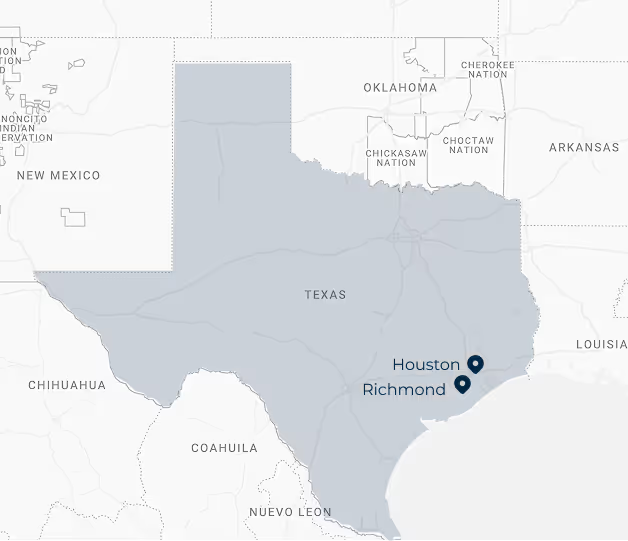
Our firm is based in the heart of Houston and primarily serves clients throughout Harris County. We also proudly extend our top-tier legal services to individuals and families in Fort Bend, Montgomery, Galveston, Brazoria, Waller, Wharton, and Austin counties.
- Harris County
- Austin County
- Brazoria County
- Brazos County
- Fort Bend County
- Galveston County
- Montgomery County
- Waller County
- Wharton County
Houston Office: 440 Louisiana St, Suite 977 Houston, TX 77002
Frequently Asked Questions
About Houston Uncontested Divorce
While Texas law doesn't require attorney representation for divorce, having legal guidance significantly improves outcomes even in uncontested cases. An experienced attorney helps ensure your agreements are legally sound, properly documented, and protect your interests.
Common problems in do-it-yourself divorces include improper property characterization, enforceability issues, missing provisions for key contingencies, and technical errors that delay or complicate proceedings. Professional guidance helps avoid these pitfalls while still maintaining the cost advantages of uncontested proceedings.
Texas requires a minimum 60-day waiting period between filing for divorce and finalizing it. This means the absolute fastest timeline for any divorce (even one with complete agreement) is 61 days from the filing date.
In practice, most uncontested divorces in Harris County take approximately 70 to 90 days from filing to finalization. This timeline accounts for the waiting period, court scheduling, and document processing. Factors that can extend this timeline include court congestion, document corrections, or scheduling conflicts.
Ethical rules prohibit an attorney from representing both spouses in a divorce, even when it is uncontested, due to the inherent conflict of interest. At Longworth Law Firm, we represent one spouse while providing clear information to both parties about the process and agreements.
This approach maintains ethical compliance while still facilitating an efficient, cooperative process. The non-represented spouse may choose to have their own attorney review documents or proceed without separate representation, understanding that our firm represents only one party's interests.
If disagreements arise after filing for an uncontested divorce, several options exist:
- Minor disagreements can often be resolved through negotiation or clarification
- Mediation can help address more significant disputes
- If necessary, the case can transition to a contested divorce
While such transitions may increase costs and extend timelines, starting with an uncontested approach doesn't prevent you from accessing more traditional divorce procedures if circumstances change. We help clients navigate these transitions when necessary, maintaining as much of the cooperative framework as possible.
These terms address different aspects of divorce. "No-fault" refers to the grounds for divorce, specifically, that neither party must prove wrongdoing to obtain a divorce. Texas allows divorce based on "insupportability" (irreconcilable differences), which doesn't assign blame to either spouse.
"Uncontested" refers to the process, or specifically, that both spouses agree on all terms without court intervention. Most uncontested divorces use no-fault grounds, but they're distinct concepts. A divorce can be contested on no-fault grounds, or, in theory, uncontested on fault-based grounds (though this is uncommon).
Mediation can be an excellent tool for couples who want an uncontested divorce but haven't yet reached an agreement on all issues. A trained mediator helps facilitate discussion and resolution of outstanding matters, enabling you to proceed with an uncontested divorce once full agreement is reached.
While technically not necessary for couples who already have a complete agreement, mediation provides a structured environment to finalize details and ensure all important issues are addressed. Many couples find this process valuable even when they believe they've already resolved most matters.
Schedule Your Confidential Case Evaluation Today
Contact Longworth Law Firm today to schedule your initial case review consultation. We serve clients throughout Harris County and surrounding areas, including Fort Bend, Montgomery, Waller, Wharton, Galveston, Brazoria, and Austin counties.