
.avif)
.avif)
.avif)
.svg) 15+ Years
15+ Years
of Family Law Experience.svg) 2,000+ Cases
2,000+ Cases
on Family Law Resolved A+ Google
and BBB Rating.svg) Extensive Local
Extensive Local
Courts Expertise
Strategic Legal Guidance For Property Division Cases
Longworth Law Firm brings 15 years of Texas family law experience and unique investigative insight to complex property division cases throughout Houston. Founded by former Houston Police Lieutenant Daryl Longworth, our firm combines a law enforcement background with advanced legal knowledge to uncover hidden assets and protect clients during financial disputes.
Our aggressive yet empathetic approach has earned us recognition as a Top Lawyer by Houstonia Magazine and an A+ rating from the BBB. We pride ourselves on transparent communication and strategic advocacy when your financial security is at stake.

What Is Property Division in Texas Divorce
Property division in Texas divorce is the legal process of distributing the assets and debts accumulated during the marriage between divorcing spouses. As a community property state, Texas presumes that most assets acquired during marriage belong equally to both spouses, regardless of whose name appears on the title or who earned the income.
However, "equal" doesn't automatically mean a 50/50 split. Texas courts are required to divide community property in a "just and right" manner, considering factors such as each spouse's earning capacity, fault in the breakup, health needs, and contributions to the marriage. This standard gives judges considerable discretion in crafting property divisions that prioritize fairness over mathematical equality.
The process becomes particularly complex when dealing with high-value assets, business interests, professional practices, or situations where one spouse has attempted to hide assets. These cases require thorough investigation, accurate valuations, and strategic negotiation to ensure equitable outcomes.
At Longworth Law Firm, we understand that property division isn't simply about dividing possessions — it's about securing your financial foundation for the future. Our approach combines meticulous asset investigation with practical legal strategy to protect what you've worked to build while positioning you for post-divorce financial stability.
Texas Community Property Laws

Community Property in Texas
Community property includes virtually all assets and debts acquired during marriage, regardless of which spouse earned the income or whose name appears on documents. This broad definition encompasses:
- Income from employment, business activities, and investments
- Real estate purchased during marriage
- Vehicles, furniture, and personal property
- Retirement accounts, pensions, and employee benefits
- Bank accounts and investment portfolios
- Business interests developed during marriage
- Debts incurred for family purposes
The key factor is timing. What’s important is when assets were acquired, not how they were earned or titled. Even assets purchased solely with one spouse's income are generally considered community property if acquired during marriage.
Separate Property Protection
Separate property remains with the original owner and is not subject to division in divorce. Texas law recognizes three categories of separate property:
- Property owned before marriage
- Property acquired during marriage by gift or inheritance
- Personal injury recoveries (with specific exceptions)
However, separate property can lose its protected status through commingling, which is mixing separate assets with community property or using community funds to improve separate property. For example, using marital income to pay the mortgage on a home owned before the marriage can create complex ownership issues that require careful legal analysis.
Proving Separate Property Status

The burden of proving separate property status rests with the spouse asserting it. This requires "clear and convincing evidence", which is a higher standard than typical civil cases. Successful separate property claims typically require:
- Comprehensive documentation of asset origins
- Clear paper trails showing no commingling
- Evidence of intent to keep property separate
- Accounting for any community contributions
Our firm's investigative approach, informed by Attorney Longworth's law enforcement background, enables us to locate and organize the documentation necessary to protect your separate property rights. At the same time, we will challenge the opposing party's improper claims to separate property.
How Does Texas Divide Property in Divorce?
The "Just and Right" Standard
Unlike states that mandate equal division, Texas requires courts to divide community property in a "just and right" manner. This flexible standard allows judges to consider the unique circumstances of each case and craft divisions that serve fairness over mathematical precision.
While many cases result in approximately equal divisions, significant deviations are possible when circumstances warrant. Courts have awarded 60/40, 70/30, or even more disproportionate divisions based on the specific factors present in individual cases.
Factors Courts Consider in Property Division
.webp)
Texas courts evaluate numerous factors when determining "just and right" property divisions:
- Each spouse's earning capacity and employability
- Education levels and time needed for training
- Age and health of both parties
- Size and nature of separate property estates
- Contributions to the marriage and community estate
- Child custody arrangements and support needs
- Fault grounds for divorce, if proven
- Waste or fraud involving community assets
- Tax implications of proposed divisions
Understanding how these factors apply to your specific situation is crucial for developing effective negotiation strategies and realistic expectations for potential outcomes. Our experience in Harris County courts provides valuable insight into how local judges typically weigh these considerations.
Our Strategic Approach to Property Division
Complex Asset Valuation
Accurate asset valuation forms the foundation of any successful property division strategy. Many assets require specialized expertise to determine fair market value:
Real estate division
Property valuations must account for current market conditions, property improvements, and the potential tax implications of retaining versus selling. We coordinate with qualified appraisers and real estate advisors to ensure accurate valuations that support your negotiation position.
Business asset division
Business valuations present unique challenges, particularly when one spouse has been actively involved in operations while the other has not. We work with forensic accountants and business valuation specialists to assess enterprise value, goodwill, and future earnings potential.
Retirement account division (QDROs)
Retirement account divisions require specialized court orders called Qualified Domestic Relations Orders (QDROs) to avoid tax penalties and ensure proper transfers. Our firm handles the complex documentation necessary to effectuate these divisions while preserving the tax-deferred status of these critical assets.
Hidden Asset Discovery

Unfortunately, some spouses attempt to conceal assets during divorce proceedings. Attorney Longworth's law enforcement background provides unique investigative skills for uncovering hidden assets:
- Thorough review of financial records and tax returns
- Analysis of business records and cash flow patterns
- Investigation of undisclosed bank accounts or investments
- Review of lifestyle versus reported income
- Coordination with forensic accountants when necessary
Our systematic approach to financial discovery ensures that all community assets are identified and properly valued before negotiation or trial.
Property Settlement Negotiation
Most property division cases resolve through negotiation rather than trial, often resulting in better outcomes for both parties. Our negotiation strategy focuses on:
- Identifying your priorities and non-negotiable items
- Developing creative solutions that address both parties' needs
- Leveraging thorough preparation to strengthen your position
- Understanding the opposing party's motivations and pressure points
- Maintaining readiness for trial to support negotiation leverage
While we prioritize negotiated settlements, our willingness and ability to litigate when necessary often lead to more favorable settlement terms. Opposing parties recognize our trial preparation and adjust their positions accordingly.
Types of Property We Handle
High-Value Assets
Complex, high-value assets require specialized handling to ensure accurate valuation and strategic division:
Business interests
Professional practices, partnerships, and closely-held corporations present unique valuation challenges. We coordinate with business valuation specialists to assess enterprise value, personal goodwill, and future earnings potential, and to develop strategies for the division that protect ongoing operations.
Investment portfolios
Stock portfolios, bonds, mutual funds, and alternative investments require careful analysis of current values, tax implications, and liquidity considerations. Our approach ensures equitable division while minimizing unnecessary tax consequences.
Professional practices
Medical, legal, and other professional practices often represent significant marital assets requiring specialized valuation approaches. We work with qualified appraisers who specialize in professional practice valuations to ensure accurate assessments.
Real Estate Division

Real estate often represents the largest single asset in many marriages, requiring careful consideration of multiple factors:
Primary residence
The family home presents both financial and emotional considerations. We help evaluate options, including sale and division of proceeds, buyout arrangements, or delayed sale to accommodate children's stability needs.
Investment properties
Rental properties and real estate investments require analysis of cash flow, appreciation potential, and management responsibilities when determining equitable division approaches.
Commercial real estate
Commercial properties often have complex ownership structures and require specialized commercial appraisals to determine accurate values for division purposes.
Retirement and Financial Assets
Retirement assets often represent substantial portions of marital estates, requiring careful handling to preserve value:
- 401(k) and 403(b) plans requiring QDRO preparation
- Traditional and Roth IRA accounts
- Pension plans and defined benefit arrangements
- Deferred compensation and stock option plans
- Life insurance policies with cash value
Our understanding of the technical requirements for retirement plan divisions ensures these critical assets are properly handled while preserving their tax-advantaged status.

Why Choose Longworth Law Firm
for Your Property Division Case
Experience in Complex Cases
With over 15 years of family law experience, our firm has successfully handled numerous complex property division cases throughout Harris County. We've developed effective strategies to address high-asset disputes, business valuations, and complex financial investigations. Our extensive courtroom experience enables us to confidently represent clients at every stage of the legal process.
Local Knowledge of Harris County Courts
Our familiarity with Harris County family courts, judges, and local procedures provides significant advantages in property division cases. We understand how different judges approach property division issues and tailor our strategies accordingly to maximize effectiveness in your specific court.
Comprehensive Legal Services
From initial asset identification through final property transfers, we handle all aspects of property division cases. Our comprehensive approach includes financial investigation, expert coordination, negotiation, and trial advocacy as needed to protect your interests throughout the process.
.svg)
Investigative Advantage
Attorney Longworth's 28-year career as a Houston Police Lieutenant provides unique investigative skills, particularly valuable in property division cases involving hidden assets or financial deception. This law enforcement background enables us to approach financial investigations with techniques and insights unavailable to most family law attorneys.
Proudly Serving the
Greater Houston Area
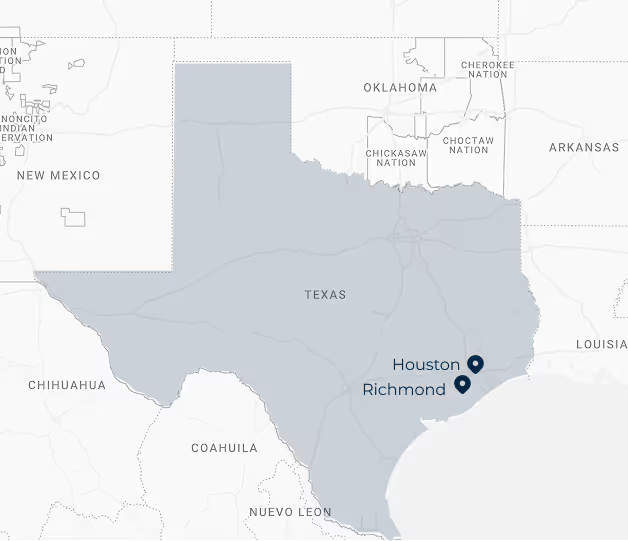
Our firm is based in the heart of Houston and primarily serves clients throughout Harris County. We also proudly extend our top-tier legal services to individuals and families in Fort Bend, Montgomery, Galveston, Brazoria, Waller, Wharton, and Austin counties.
- Harris County
- Austin County
- Brazoria County
- Brazos County
- Fort Bend County
- Galveston County
- Montgomery County
- Waller County
- Wharton County
Houston Office: 440 Louisiana St, Suite 977 Houston, TX 77002
Frequently Asked Questions
About Property Division
Texas requires equitable distribution of all community property (marital assets and debts). Courts must divide property in a "just and right" manner, which often results in roughly equal division but allows significant deviations based on specific circumstances, such as fault, earning capacity, health needs, and contributions to the marriage.
Yes. Separate property (assets owned before marriage or acquired during marriage by gift, inheritance, or personal injury recovery) remains with the original owner and is not subject to division. However, you must prove separate property status with "clear and convincing evidence", which requires thorough documentation and advanced legal knowledge.
Community debts are subject to equitable distribution similar to assets. Courts consider factors such as who incurred the debt, who benefited from it, and who has the financial capacity to pay when allocating debt responsibility. Strategic debt allocation can significantly impact your post-divorce financial position.
Equitable distribution is the legal standard in Texas community property cases that ensures a fair allocation of assets and debts. Courts must consider numerous factors, including fault in the breakup, financial waste, earning capacity, health, and child custody needs, before making final property divisions. This standard provides flexibility to address unique circumstances in each case.
Yes. A valid prenuptial or postnuptial agreement can override community property laws and dictate how property division will be handled. These agreements must meet specific legal requirements to be enforceable, including full disclosure of assets, voluntary signing without coercion, and fair terms at the time of execution.
Property division timelines depend on case complexity, asset values, and cooperation between parties. Simple cases with agreed valuations may resolve within 3 to 6 months, while complex cases involving business valuations, hidden assets, or high conflict can take 12 to 18 months or longer. Thorough preparation often leads to better outcomes despite extended timelines.
Expert witnesses are often crucial in complex property division cases. Business valuation specialists, forensic accountants, real estate appraisers, and financial analysts provide objective assessments that support your position and help courts make informed decisions. We coordinate with qualified specialists when expert testimony is needed.
Contact Our Houston Property Division Attorney Today
Don't risk your financial future by facing property division without experienced legal representation. Contact Longworth Law Firm today to schedule a confidential case evaluation with our property division attorneys. We'll review your situation, explain your options, and develop a strategic approach to protect your interests throughout the property division process.
Our commitment to clear communication, strategic advocacy, and thorough preparation ensures you receive the guidance and representation necessary to secure a favorable property division outcome. Call us today to begin protecting your financial future.